How God Uses Context In Divine Revelation?
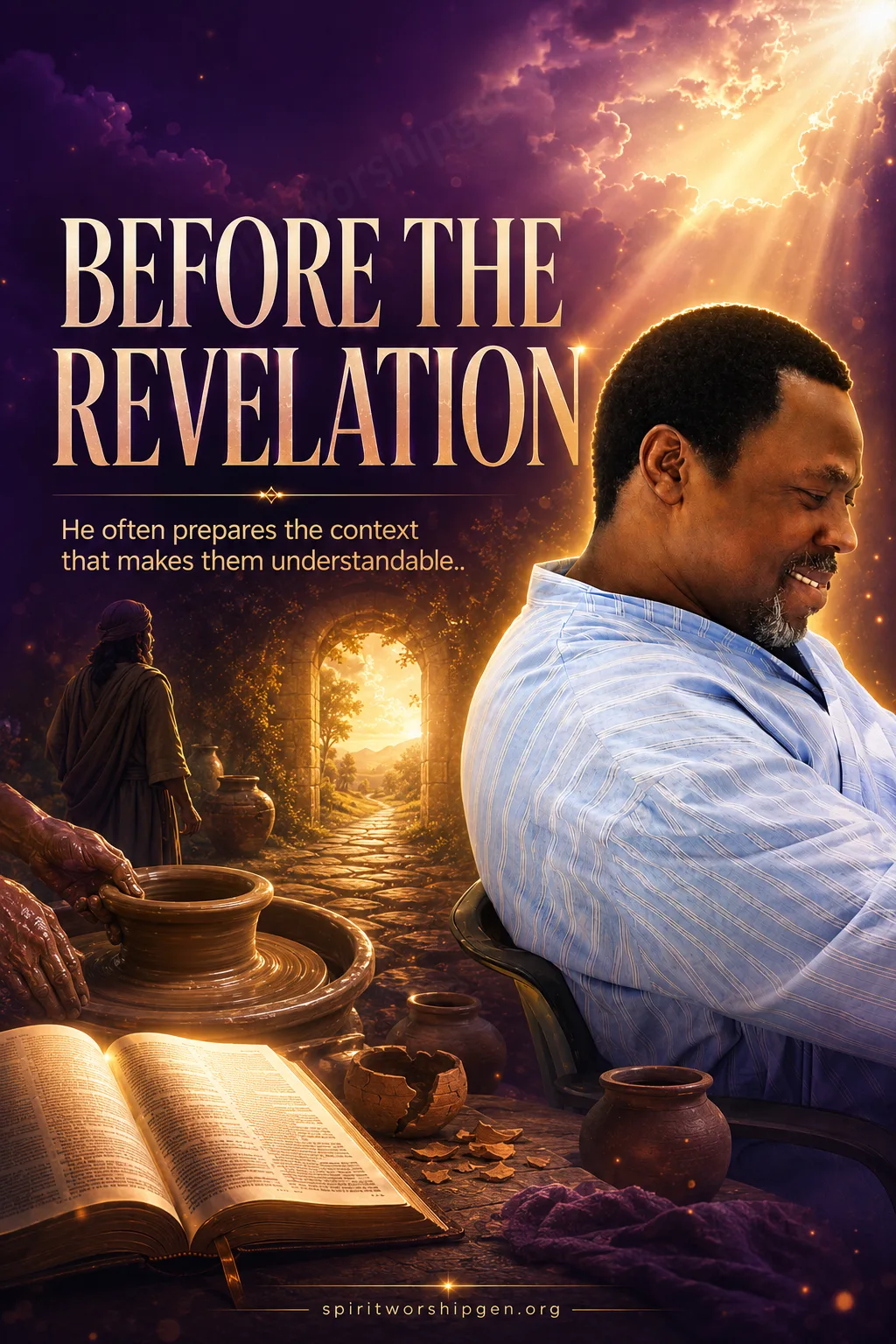
🏺 Before He Speaks, He Arranges: How God Gives Context Before Instruction
“Can I not do with you as this potter has done, declares the Lord? Look, as the clay is in the potter’s hand, so are you in My hand, O house of Israel.” — Jeremiah 18:6
Key Scriptures:
Jeremiah 18:1–11, Isaiah 55:8–9, Matthew 21:18–22, Exodus 3:1–4, Genesis 15:5, Ezekiel 37:1–14, Luke 10:25–37, Acts 10, Hosea 1–3, 2 Samuel 12:1–7, John 13:1–17, Matthew 17:24–27, Judges 6
On this page
- The Potter’s Shop God Arranged
- Context Before Instruction
- What is the Role of Context in the Way God Deals with His Children?
- The Pattern Throughout Scripture
- Why God Teaches This Way
- Instruction Without Context vs. Context Plus Instruction
- Practical Application: Recognizing God’s Arranged Context
- The Environment Is Often the Sermon
- Prayer
🏺 The Potter’s Shop God Arranged
Why does God sometimes send us somewhere instead of simply giving us the answer?
“This is the word that came to Jeremiah from the Lord: ‘Go down to the potter’s house, and there I will give you My message.’” — Jeremiah 18:1–2
Notice what God did not do. He did not open the heavens and explain Himself from a distance. He sent Jeremiah’s feet to a specific address first. “So I went down to the potter’s house, and I saw him working at the wheel.” — Jeremiah 18:3
Jeremiah watched an ordinary craftsman shape an ordinary jar. But the jar did not turn out as the potter hoped. “But the jar he was making did not turn out as he had hoped, so he crushed it into a lump of clay again and started over.” — Jeremiah 18:4

Take note of the order of events. Jeremiah did not stumble into this shop by accident. He was there on God’s instruction, watching a scene that God Himself had designed for that exact hour. Only after Jeremiah had watched the clay be spoiled and reshaped did the word of the Lord come to him: “Can I not do with you as this potter does?… As the clay is in the potter’s hand, so are you in My hand.” — Jeremiah 18:6
The revelation did not begin with a sentence. It began with a scene.
📜 Context Before Instruction
“‘For My thoughts are not your thoughts, neither are your ways My ways,’ declares the Lord.” — Isaiah 55:8
God’s thoughts about Judah’s rebellion were already settled in heaven before Jeremiah ever walked to the potter’s shop. But God did not simply drop that verdict on Jeremiah’s head. He first gave him context, then He gave him instruction. Because Jeremiah had already watched the clay be crushed and remade with his own eyes, he did not argue with God, did not question the fairness of the coming judgment, did not ask “why.” The experience had already answered the question before it was asked.
Immediately after the potter’s house encounter, the instruction came plainly: “Go and tell the people of Judah and Jerusalem, ‘This is what the Lord says: I am preparing a disaster for you and devising a plan against you. So turn from your evil ways, each one of you, and reform your ways and your actions.’” — Jeremiah 18:11
💡 What is the Role of Context in the Way God Deals with His Children?
1️⃣God uses context to prepare our hearts so we can understand what His words alone cannot fully explain.
2️⃣Before God reveals His purpose, He often prepares the context that makes His revelation unmistakable.
3️⃣Context is God’s classroom where revelation becomes understanding.
4️⃣God often teaches us through what He arranges before He teaches us through what He says.
“When God is executing His plan in our lives, He also designs and arranges events which will continue to unfold until His purpose is revealed.”— Prophet TB Joshua
Jeremiah received context plus instruction. This is the pattern of servanthood. God rarely speaks to His servants in isolation from their circumstances. He designs the setting so the servant can carry the instruction without resistance, without confusion, and without needing to be argued into obedience.
Jeremiah did not happen to visit a potter that day. God arranged the visit. The potter did not accidentally spoil the clay. God allowed Jeremiah to witness the exact scene that would become the vocabulary of heaven’s coming message. The revelation was not merely spoken to Jeremiah. It was first experienced by him.
Prophet TB Joshua also reminds us where the true weight of understanding lies:
“When we talk of challenges, knowledge is not the key; obedience is.” — Prophet TB Joshua
Jeremiah’s obedience to a small, seemingly unremarkable instruction, “go down to the potter’s house,” positioned him to receive a revelation that would shape the rest of his prophetic ministry. He did not need to be smarter than God to receive it. He only needed to go where he was sent, watch what he was shown, and listen for what came next.
“Every day, God has something to say to you. Even when He seems to be quiet, God is still saying something.” — Prophet TB Joshua
🔥 The Pattern Throughout Scripture
This is not an isolated event in Jeremiah’s life. It is a pattern that runs through the whole of Scripture. God consistently prepares the environment before He gives the explanation, because the experience becomes the vocabulary through which the instruction is finally understood.
🌳 The Fig Tree and the Lesson on Faith — Matthew 21:18–22
Jesus cursed a fig tree on the road, and by morning it had withered from the roots. He did not begin by lecturing the disciples on faith. He let them witness something impossible first. Only when they marveled,
“How did the fig tree wither so quickly?”
did Jesus turn the moment into a teaching on faith and prayer,
“Truly I tell you, if you have faith and do not doubt… you can say to this mountain, ‘Go, throw yourself into the sea,’ and it will be done.” — Matthew 21:20–21.
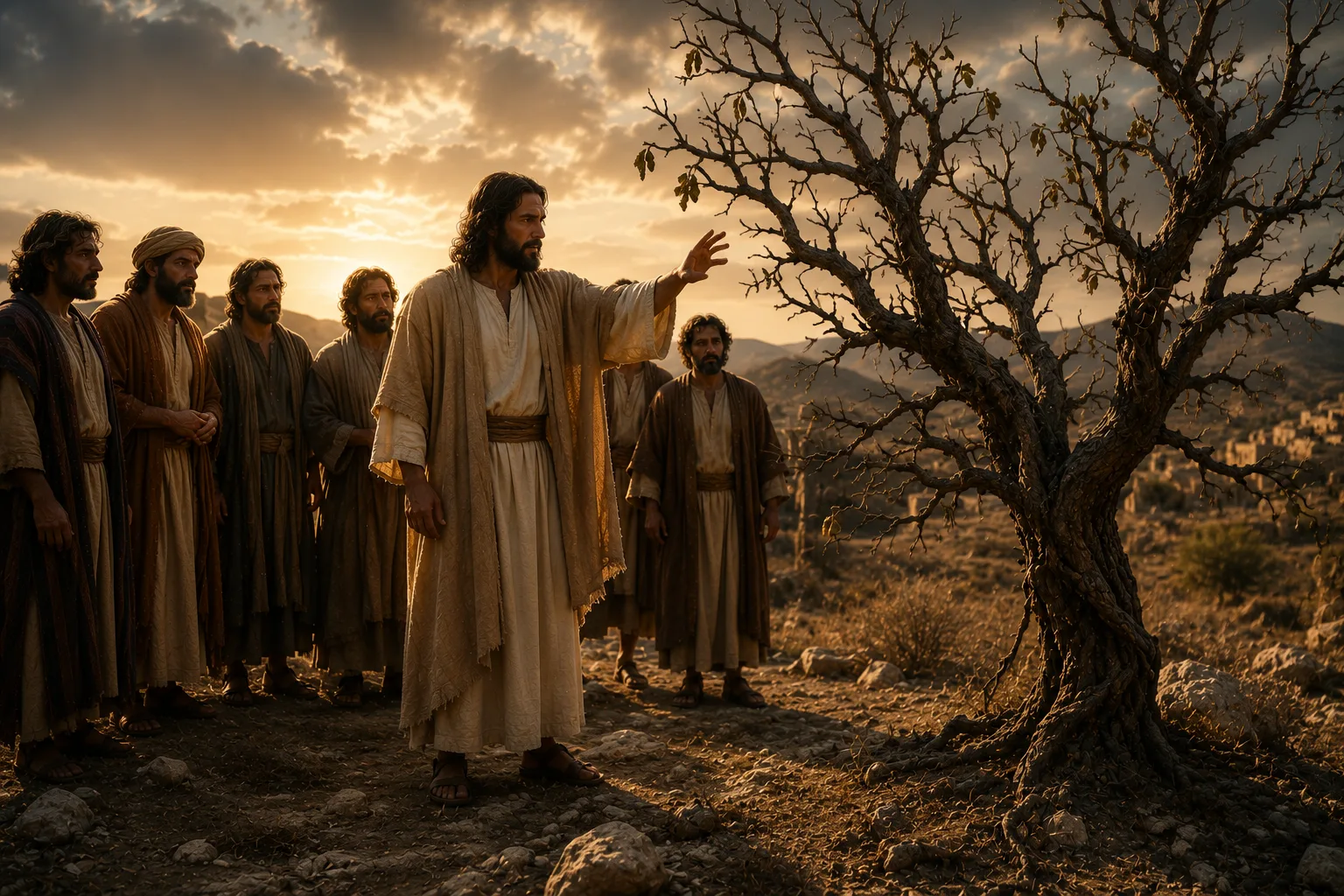
The withered tree became the context for the lesson on unwavering belief.
🔥 The Burning Bush Moses Had to Turn Aside to See — Exodus 3:1–4
God did not begin by saying, “Moses, I want you to deliver Israel.” He first created an unusual sight.
“Moses saw that though the bush was on fire it did not burn up. So Moses thought, ‘I will go over and see this strange sight, why the bush does not burn up.’” — Exodus 3:2–3.
Only after Moses stepped aside, out of his ordinary business, to investigate the context did God speak from within it: “Do not come any closer… I am the God of your father.”

Only after Moses stepped into the context did God speak.
The burning bush became the context through which Moses understood God’s holiness, His presence, and His power to preserve His people in the midst of affliction.
Context first. Calling second.
The calling came only after the curiosity.
✨ The Stars Abraham Was Told to Count — Genesis 15:5
God did not merely announce, “Your descendants will be many.” He physically brought Abraham outside his tent.
“He took him outside and said, ‘Look up at the sky and count the stars, if indeed you can count them.’ Then He said to him, ‘So shall your offspring be.’” — Genesis 15:5.

The night sky became the visual context for a promise too large for words alone to carry.
💀 The Valley of Dry Bones — Ezekiel 37:1–14
God could simply have told Ezekiel, “Israel will live again.” Instead, He transported him into a valley littered with dry, lifeless bones.
“He led me back and forth among them, and I saw a great many bones on the floor of the valley, bones that were very dry.” — Ezekiel 37:2.
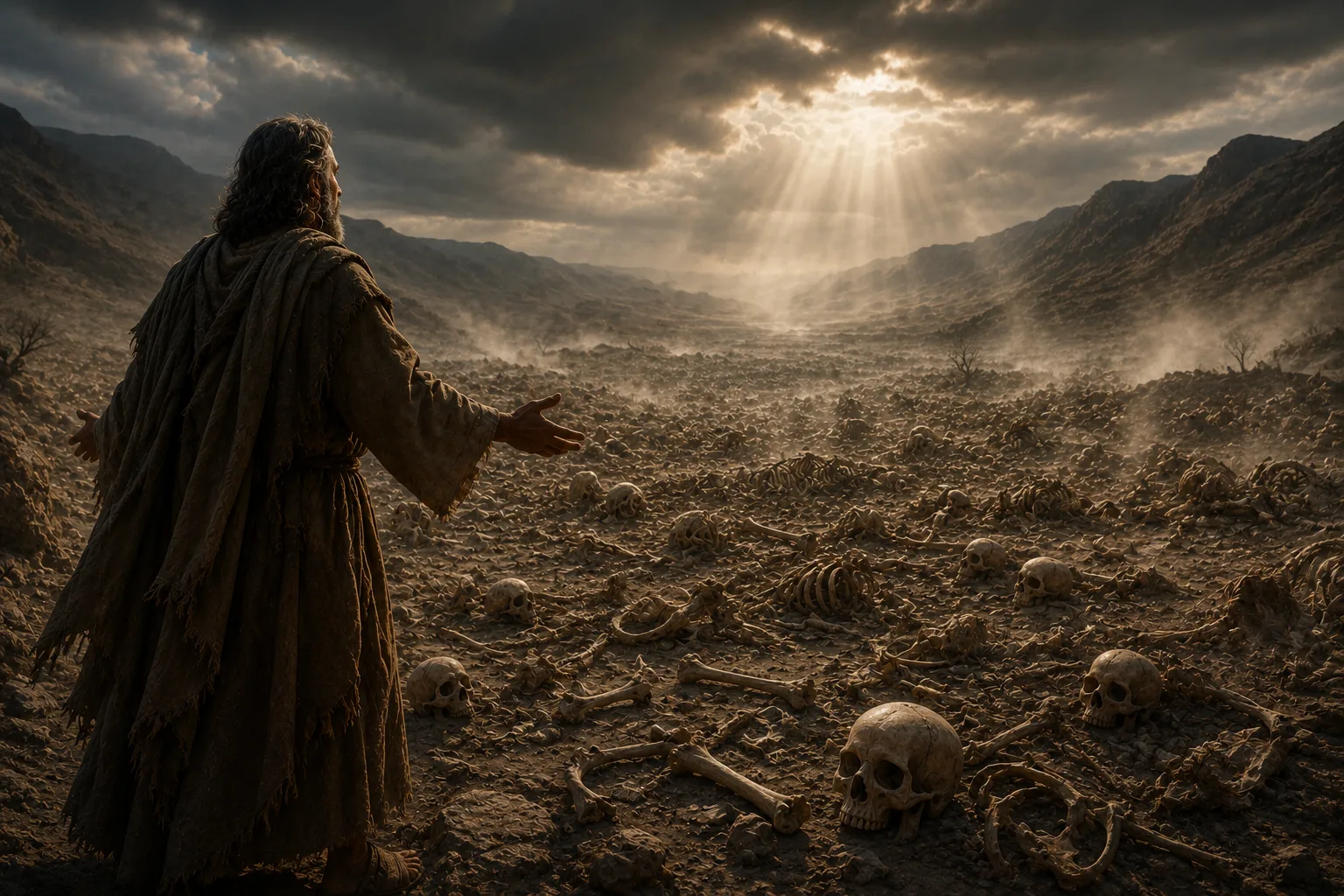
Only after Ezekiel had walked among the hopelessness did God ask him the question that carried the whole revelation, > “Son of man, can these bones live?” — Ezekiel 37:3.
The valley itself became the message. Israel’s national despair had to be seen before its resurrection could be believed.
🛣️ The Road to Jericho: The Good Samaritan — Luke 10:25–37
A lawyer asked Jesus a simple question,
“Who is my neighbour?”
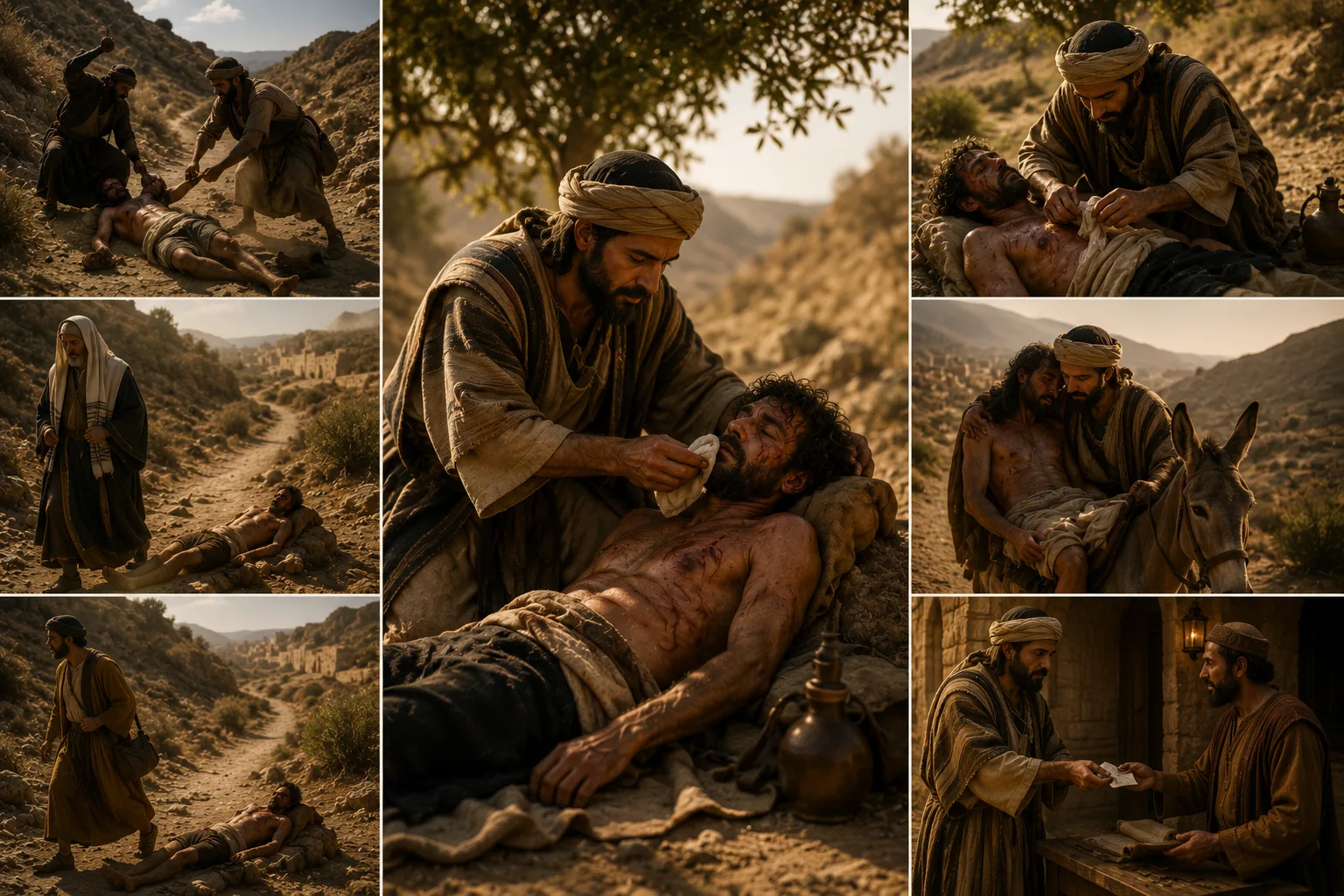
Jesus did not answer with a definition. He built a scene. A man beaten and left half dead. A priest who passed by. A Levite who passed by. A Samaritan who stopped, bandaged his wounds, and paid for his care. The road, the robbers, the silence of religious men, and the compassion of a despised outsider all became the context. The story answered the question more powerfully than any dictionary entry ever could.
🕊️ Peter’s Vision of the Sheet — Acts 10
God wanted Peter to understand that the Gentiles were no longer to be regarded as unclean. He did not begin with a theology lecture. He gave Peter a vision, a great sheet let down from heaven filled with all kinds of animals, and a voice saying,
“Get up, Peter. Kill and eat.” — Acts 10:13.

Peter wrestled with the vision three times before he understood it. Then, at that exact moment, messengers sent by a Gentile centurion arrived at the gate. The vision and the real-life event became one context, and suddenly the instruction, “Do not call anything impure that God has made clean,” made perfect sense.
💍 Hosea’s Marriage to Gomer — Hosea 1–3
God did not simply tell Hosea,
“Israel has been unfaithful to Me.” He commanded him, “Go, marry a promiscuous woman.” — Hosea 1:2.
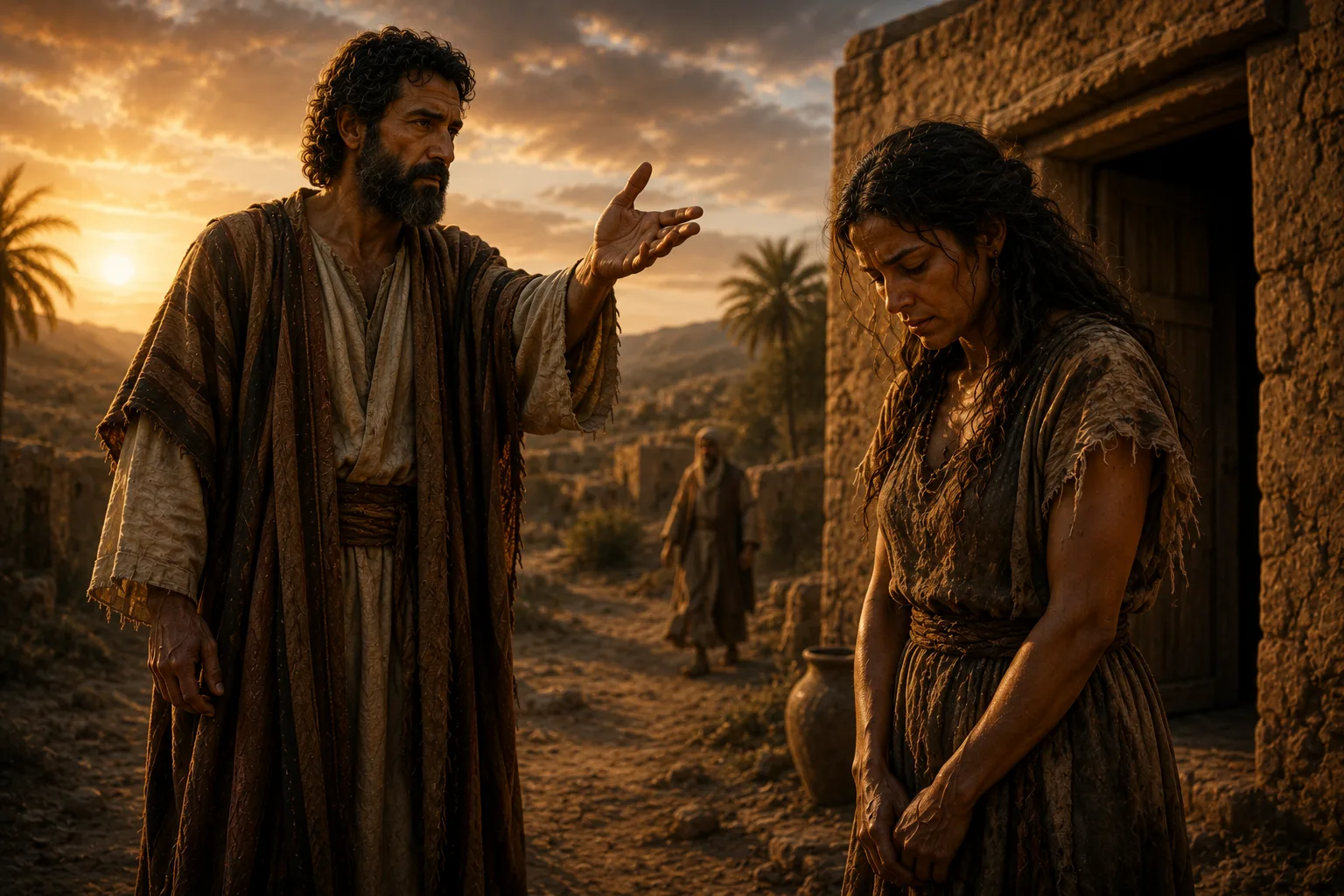
Hosea lived the message before he ever preached it. His own marriage, his own heartbreak, his own pursuit of a wandering wife became the very illustration God used to describe His pursuit of an unfaithful Israel. The prophet’s private pain became public revelation.
🐑 Nathan’s Story of the Poor Man’s Lamb — 2 Samuel 12:1–7
Nathan did not walk into David’s palace and immediately accuse the king of murder and adultery. He told a story first. A rich man with vast flocks. A poor man with a single, beloved lamb. The rich man’s cruelty in taking the poor man’s only lamb. David, stirred to anger, judged the situation:
“As surely as the Lord lives, the man who did this must die!”
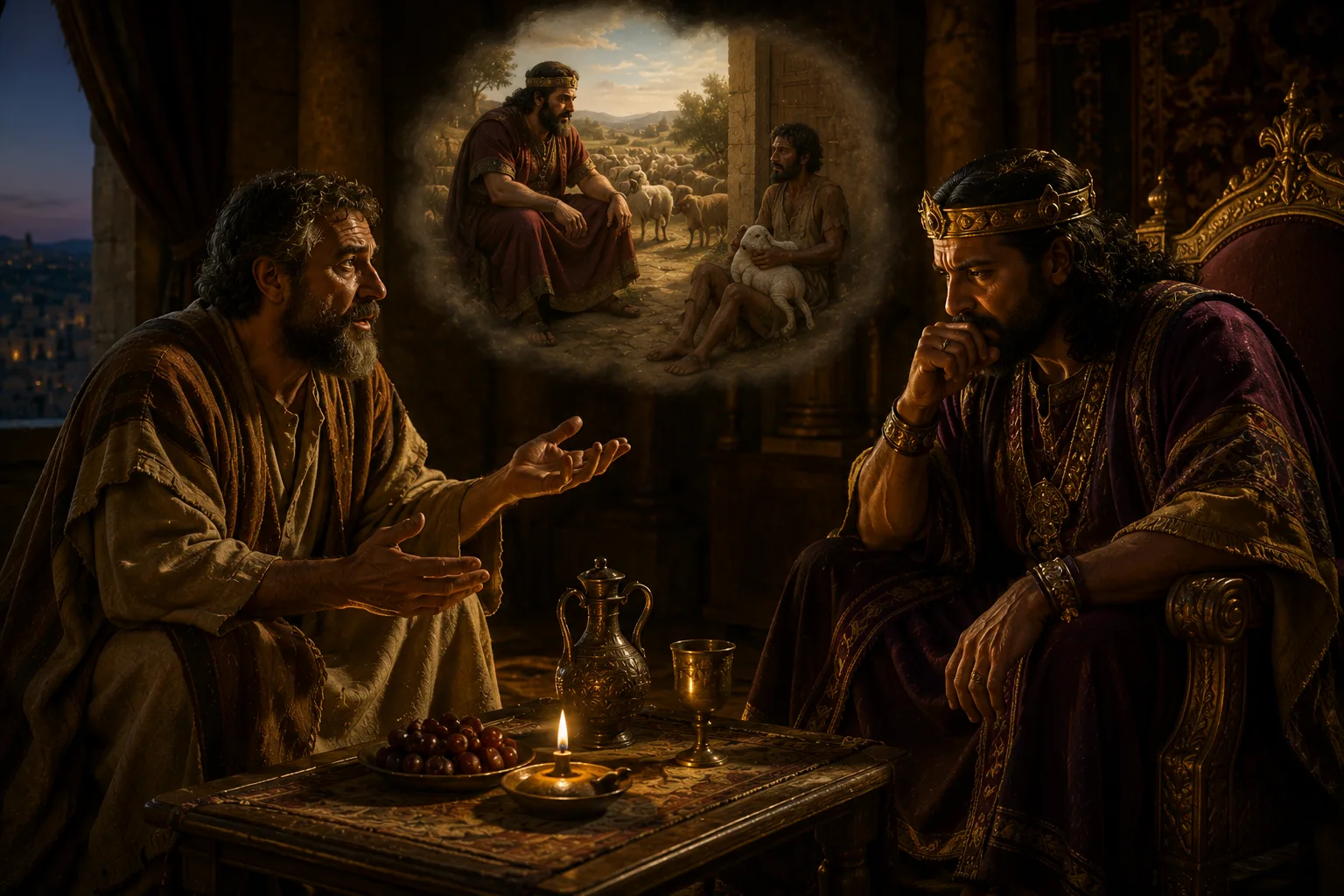
Only then did Nathan say the four words that pierced the king’s own conscience,
“You are the man!” — 2 Samuel 12:5–7. The story created the context that let David see his own sin before he was told what it was.
🧺 Jesus Washing the Disciples’ Feet — John 13:1–17
Jesus did not begin the upper room by lecturing His disciples on servant leadership. He rose, wrapped a towel around His waist, and washed their feet Himself. Only after the act was finished did He ask,
“Do you understand what I have done for you?” — John 13:12.
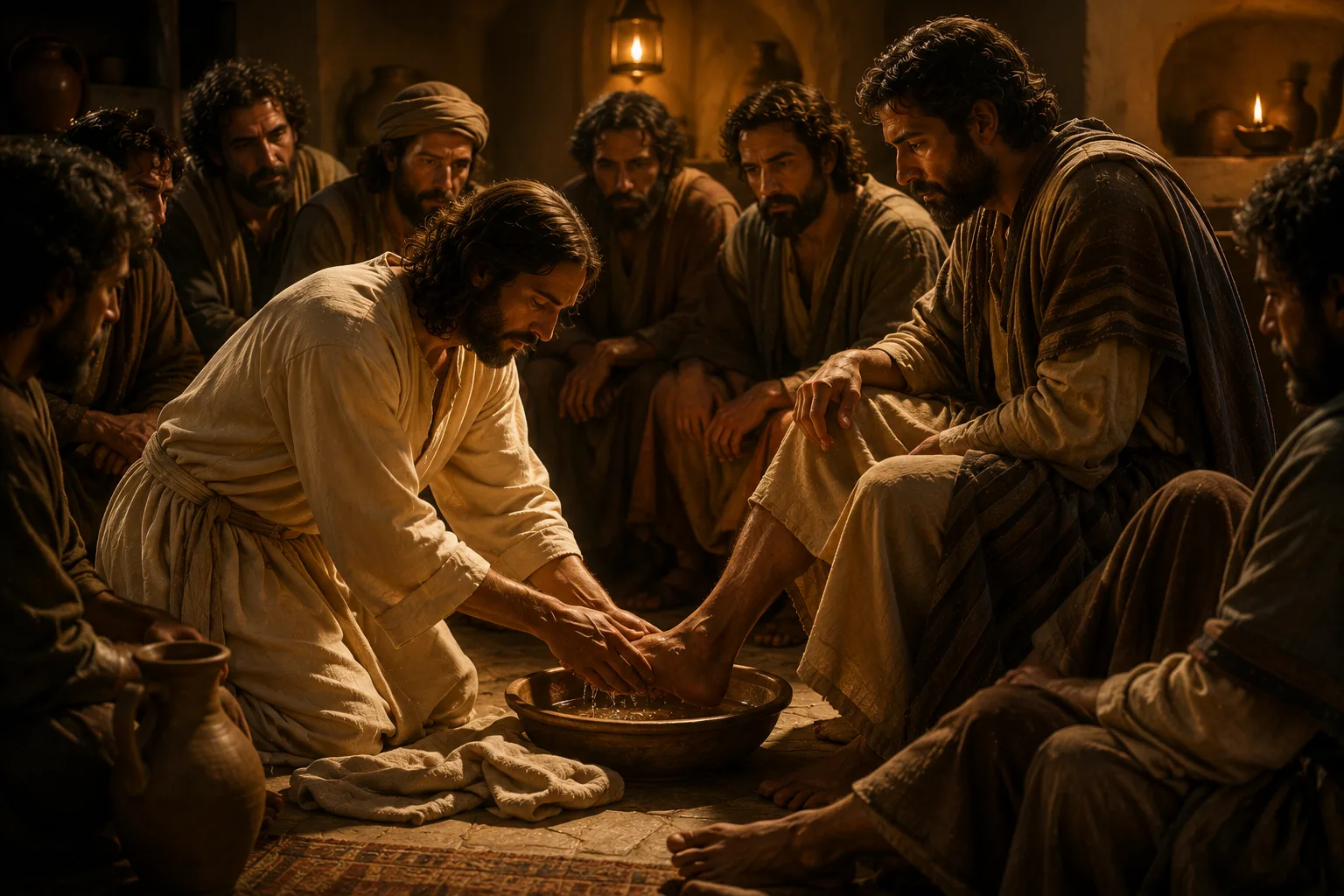
The demonstration came before the doctrine. The action explained the words far better than the words alone could have.
🐟 The Coin in the Fish’s Mouth — Matthew 17:24–27
Jesus could have simply taught Peter about God’s provision and about not giving needless offense over the temple tax. Instead, He told Peter to go and cast a hook into the lake.
“Take the first fish you catch; open its mouth and you will find a four-drachma coin. Take it and give it to them for my tax and yours.” — Matthew 17:27.
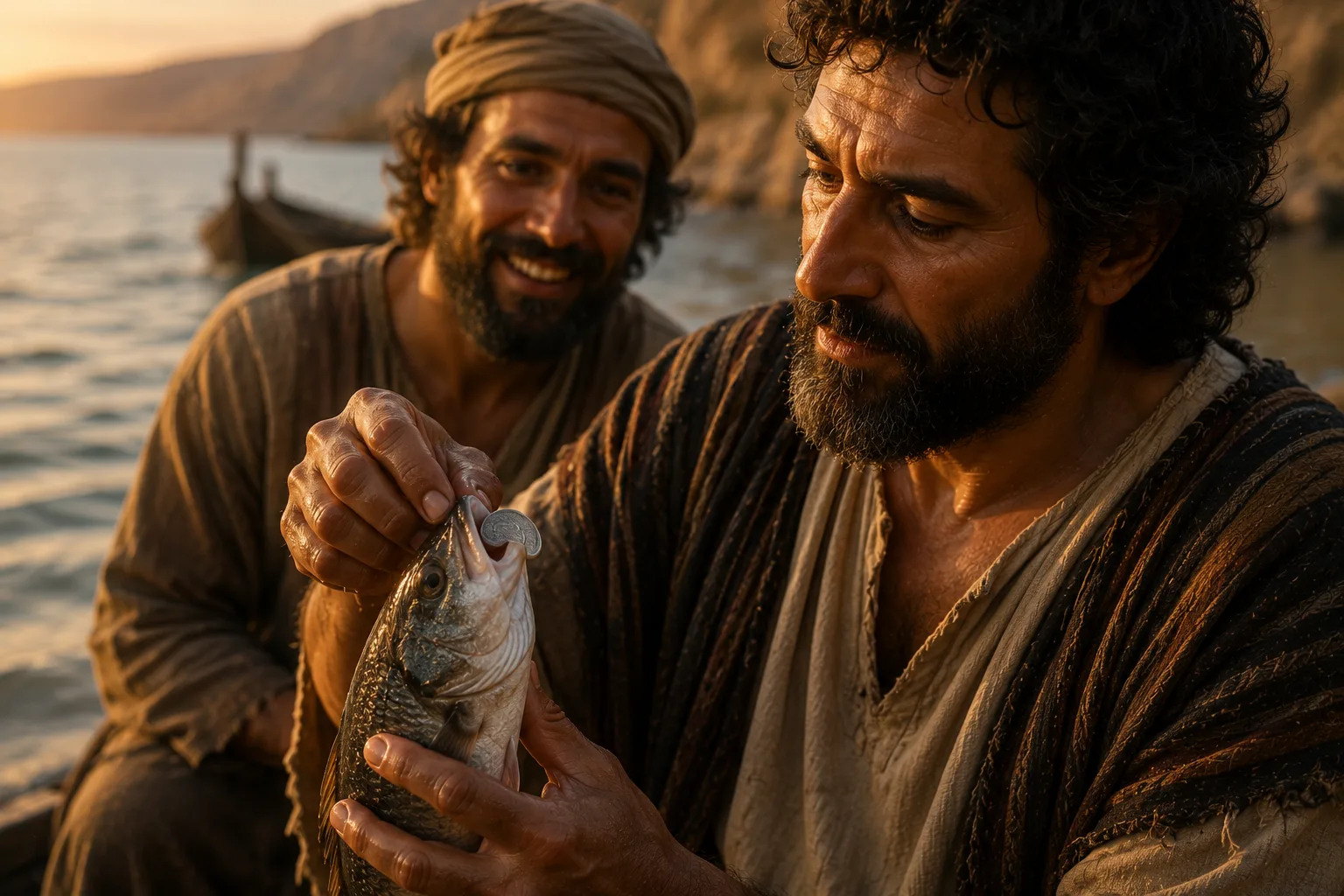
The miracle itself was the classroom. Provision was not just promised, it was placed directly in Peter’s hand through an arranged, almost playful, act of obedience.
🧵 Gideon’s Fleece — Judges 6
Before sending Gideon into battle against an overwhelming Midianite army, God patiently worked through Gideon’s requests involving the fleece, wet on dry ground, then dry on wet ground.
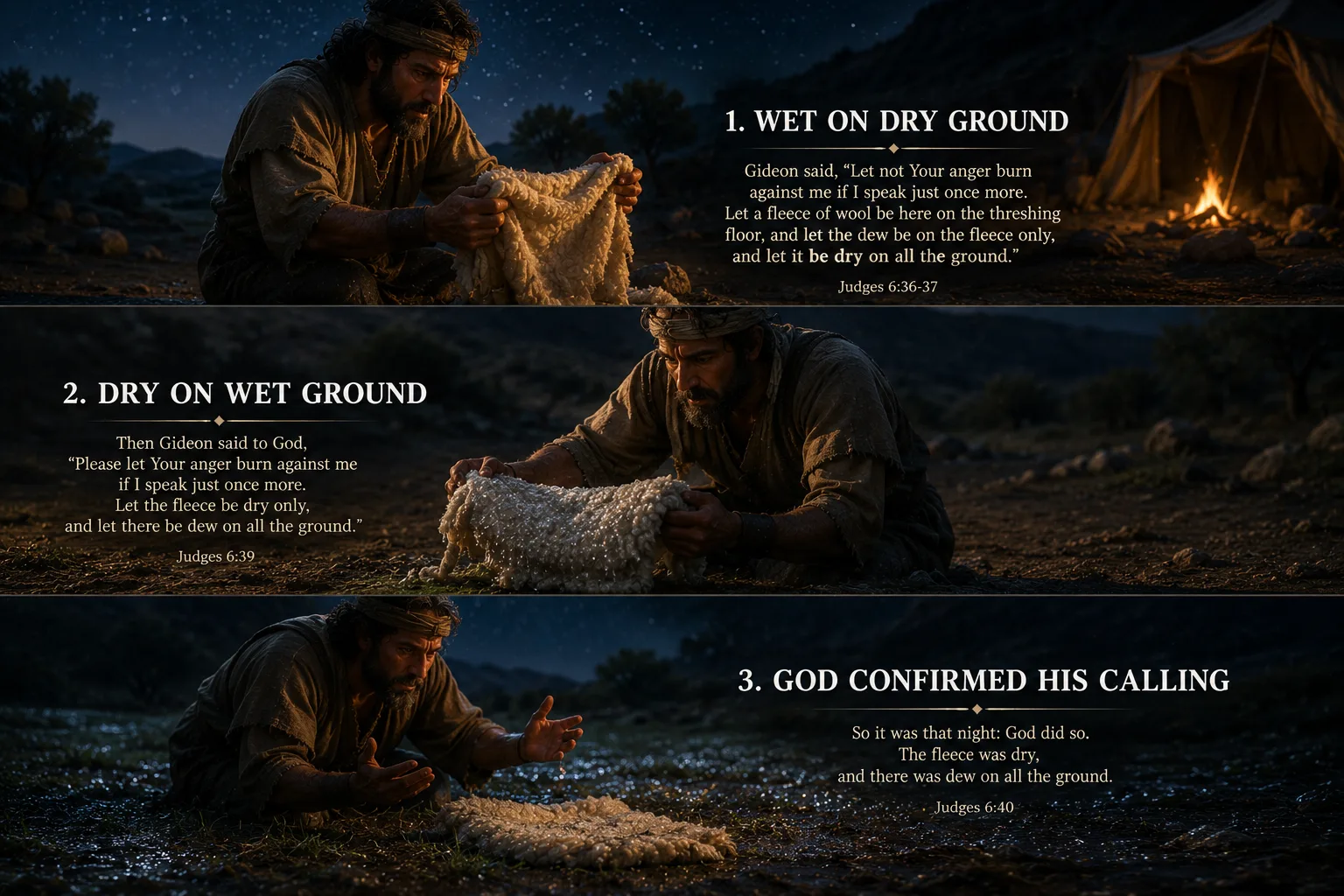
These signs were not merely proofs demanded out of unbelief. They were contexts God used to strengthen a fearful man’s faith before handing him an assignment far bigger than his confidence.
🧭 Why God Teaches This Way
Look at how consistent this pattern is across the whole of Scripture:
- He showed Moses a bush before a commission.
- He showed Abraham stars before a covenant.
- He showed Jeremiah a potter before a prophecy.
- He showed Ezekiel dry bones before a promise of restoration.
- He showed Peter a sheet before opening the gospel to the Gentiles.
- He showed the disciples a withered fig tree before teaching them about faith.
- He washed feet before teaching humility.
- He gave Nathan a story before David could see his own sin.
- He gave Gideon a fleece before sending him to war.
God rarely gives revelation in a vacuum. He often prepares the heart by first arranging the environment.
📊 Instruction Without Context vs. Context Plus Instruction
| Instruction Without Context | Context Plus Instruction | |
|---|---|---|
| How it lands | As a bare command to obey or resist | As a revelation the heart already recognizes |
| Response | Questioning, negotiating, resisting | Surrender, because the eyes have already seen |
| Example | A word given with no experience to anchor it | Jeremiah watching the potter before hearing the verdict |
| Depth of understanding | Head knowledge | Heart revelation |
| Longevity in memory | Easily forgotten or argued away | Becomes a permanent reference point for faith |
🙏 Practical Application: Recognizing God’s Arranged Context
Stop dismissing “coincidences” as random. The potter’s house was not a coincidence to Jeremiah. It was an appointment. Ask what a recent, unusual circumstance in your life might be showing you before you ask God to remove it.
Watch before you ask why. Jeremiah did not interrupt the potter’s work to demand an explanation. He observed first. Let your circumstances finish speaking before you rush to question God about them.
Journal recurring themes. If the same lesson keeps appearing in different settings, workplace, family, church, that repetition is not noise. It is likely the environment God is arranging around you.
Do as you are told, without trying to be smarter than the Instructor. Suspense, patience, and even quiet excitement are part of walking with God. Jeremiah simply went down to the potter’s house. He did not need the full explanation before he obeyed the first small step.
Trust the sequence: context first, then instruction. Do not skip ahead demanding words from heaven while ignoring the situations heaven has already placed in front of you.
Let the experience interpret the instruction, not the other way around. Nathan’s story made sense of David’s sin. The potter’s house made sense of Judah’s judgment. Let your own life’s “potter’s house” moments interpret whatever instruction follows.
🌄 The Environment Is Often the Sermon
Perhaps this is why so many believers miss God’s voice. They keep waiting for words from heaven while overlooking the situations God has carefully arranged around them. Yet throughout Scripture, God repeatedly teaches His servants by placing them in the right context before giving them the right instruction.
Context is not incidental to revelation, it is often part of the revelation itself. Before God changes your understanding, He frequently changes your environment. Before He gives you an explanation, He gives you an experience. That experience becomes the lens through which His words are finally understood.
The servant of God must learn not only to listen for God’s voice but also to observe God’s arrangements. The God who speaks through Scripture is the same God who speaks through the divinely orchestrated circumstances He places before you today.
🙏 Prayer
Lord, forgive me for the times I demanded words from heaven while ignoring the potter’s house You had already placed me in. Teach me to observe as carefully as I listen. Give me Jeremiah’s patience to watch before I question, and his obedience to go where I am sent without needing every answer first. Let my circumstances become the context through which I finally understand Your instruction. In Jesus’ name, Amen.
Good Morning 🌄 and PROSPER ✨ today!
Let this blog stir your spirit. Share it with someone who needs to hear this today, and continue your walk with God in deeper intimacy at www.spiritworshipgen.org.
Please like, follow and subscribe to our social media channels:
Facebook: Generation of Spiritual Worshippers - GOSW
YouTube: @spiritworshipgen
X (Former Twitter): @gensworshipper
Instagram: @spiritworshipgen
TikTok: @spiritworshipgen
References
GOSW: 🏺 Before He Reveals, God Gives Context
🏺 Before He Reveals, God Gives Context
Published by SpiritWorshipGen – A Generation of Spiritual Worshippers
Comments
This discussion is closed for new comments.